
What Is the EmpCo Directive?
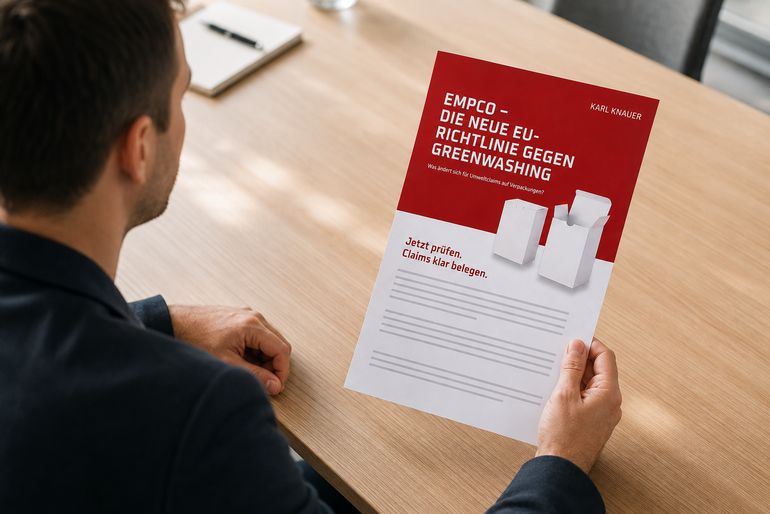
EmpCo stands for “Empowering Consumers for the Green Transition.” EU Directive 2024/825 empowers consumers by providing more reliable information and better protection against misleading commercial practices.
The new rules are based on the European EmpCo Directive. In Germany, its provisions against greenwashing have been implemented through the German Act Against Unfair Competition (UWG). The directive focuses on environmental claims, sustainability labels, future-oriented commitments, and information regarding durability and software updates, among other topics.
Four Key Areas Brands Should Review Now
1. General Environmental Claims
Claims such as “green,” “environmentally friendly,” or “sustainable” may not be used broadly unless the relevant recognized excellent environmental performance can be substantiated.
2. Climate Neutrality
Products may not be advertised as “climate neutral,” “carbon neutral,” or with claims conveying a similar meaning if those claims are based on offsetting emissions.
3. Sustainability Labels
Private sustainability labels must be based on a certification scheme. Alternatively, labels established by public authorities may be used.
4. Scope of the Claim
An environmental benefit related to an individual component may not be presented as if it applied to the entire product or the company’s overall operations.
The Quick EmpCo Claim Check

Five questions for marketing, procurement, and packaging development teams. These questions are not a substitute for legal review, but they can help identify potentially problematic claims at an early stage.
1. Is the Claim Specific?
What exactly is the environmental benefit?
2. Is the Scope Clear?
Does the claim refer to the product, the packaging, the material, or the company?
3. Can the Claim Be Substantiated?
Is there current, reliable evidence to support it?
4. Is the Label Permitted?
Is it based on a certification scheme or established by a public authority?
5. Is the Message Easy to Understand?
Can consumers understand the claim without additional interpretation?

EmpCo FAQs
What Does EmpCo Stand For?
EmpCo is the commonly used abbreviation for the “Empowering Consumers for the Green Transition” Directive. Its purpose is to empower consumers through better information and to combat greenwashing.
When Do the New Rules Take Effect?
EU member states were required to implement the directive by March 27, 2026. In Germany, the new UWG provisions governing environmental claims and sustainability communications must be applied beginning September 27, 2026.
Are Terms Such as “Sustainable” Generally Prohibited?
Not every environmental claim is automatically prohibited. However, general environmental claims will be subject to significantly stricter requirements and must be supported by recognized excellent environmental performance relevant to the claim. Specific claims must also be truthful, clear, and verifiable.
Can Products Still Be Advertised as “Climate Neutral”?
A product-related claim stating that a product has a neutral, reduced, or positive impact on greenhouse gas emissions may not be based on offsetting emissions outside the product’s value chain.
Investments in climate projects may still be communicated in a factual manner, provided that the communication is not misleading.
Which Sustainability Labels May Still Be Used?
Sustainability labels must be based on a certification scheme or established by a public authority. Sustainability labels created by a company itself without such a foundation are not permitted.
What Does EmpCo Mean for Packaging Projects?
Environmental claims should be considered from the very beginning of the development process. Materials, structural design, printing, and the available data determine which claims can subsequently be made in a specific and verifiable manner.
Does Karl Knauer Provide Legal Advice?
No. Karl Knauer provides support with packaging development, material selection, and the available technical information. The final legal assessment of specific advertising claims should be performed by the appropriate legal or compliance professionals.